Recipe of Super Quick Homemade Japanese Simmered Fish (Nitsuke)
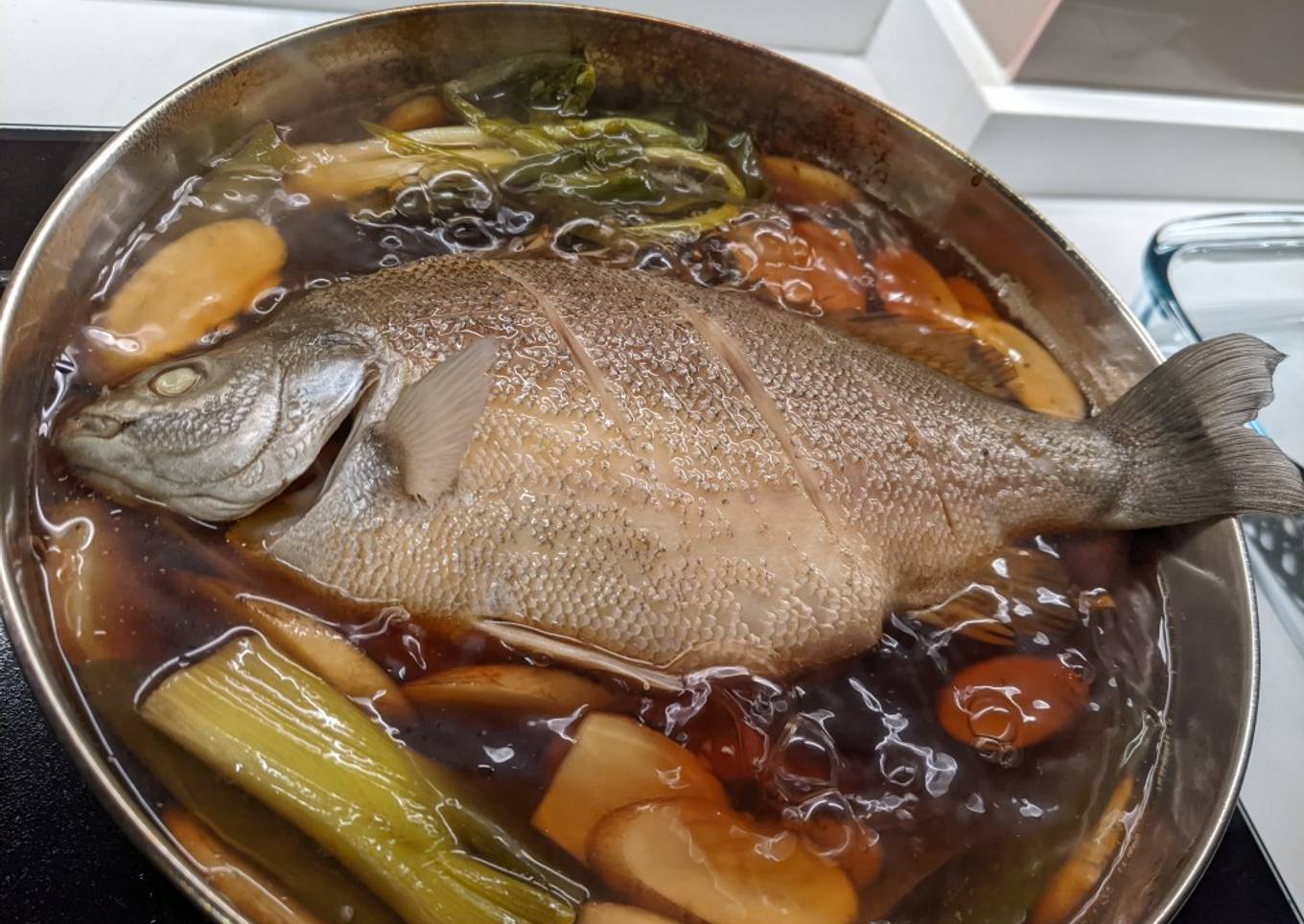
Hey everyone, hope you're having an incredible day today. Today, I'm gonna show you how to make a distinctive dish, Recipe of Ultimate Japanese Simmered Fish (Nitsuke). It is one of my favorites food recipes. For mine, I will make it a bit unique. This is gonna smell and look delicious.
In regards to cooking, it is crucial to take into account that everyone started somewhere. I do not know of a single person who was born with a wooden cooking spoon and all set. There is a lot of learning that needs to be carried out as a way to become a prolific cook and then there is always room for advancement. Not only would you need to start with the basics when it comes to cooking however, you almost should start if understanding how to cook a fresh cuisine such as Chinese, Thai, or Indian food.
This means at any given time in your cooking cycle cycles there is quite probably someone somewhere that is worse or better at cooking compared to you personally. Take advantage of this as the very best have bad days when it comes to cooking. There are lots of people who cook for different reasons. Some cook as a way to eat and survive although some cook simply because they actually like the process of ingestion. Some cook through the times of emotional upheaval and many others cook out of absolute boredom. Whatever your reason for cooking or understanding how to cook you should always begin with the fundamentals.
The good news is that once you've heard the fundamentals of cooking it's unlikely you will ever have to displace them. Which usually means that you could constantly build up and expand your cooking skills. As you find new recipes and better your culinary skills and talents you will quickly realize that preparing your meals from scratch is much more rewarding than preparing prepackaged meals that are purchased from the shelves of your regional supermarkets.
Many things affect the quality of taste from Japanese Simmered Fish (Nitsuke), starting from the type of ingredients, then the selection of fresh ingredients, the ability to cut dishes to how to make and serve them. Don't worry if you want to prepare Japanese Simmered Fish (Nitsuke) delicious at home, because if you already know the trick then this dish can be used as an extraordinary special treat.
As for the number of servings that can be served to make Japanese Simmered Fish (Nitsuke) is 3 - 4 people. So make sure this portion is enough to serve for yourself and your beloved family.
Just in addition, the time it takes to cook Japanese Simmered Fish (Nitsuke) estimated approx 30 - 45 mins.
To get started with this particular recipe, we have to first prepare a few ingredients. You can have Japanese Simmered Fish (Nitsuke) using 16 ingredients and 14 steps. Here is how you can achieve that.
Second attempt when experimenting a worthy lunar new year fish dish to serve in laws at our new house.
Ingredients and spices that need to be Take to make Japanese Simmered Fish (Nitsuke):
- Base Ingredients
- 1 whole fish, scaled & gutted (see fish notes below)
- Knob ginger slightly larger than thumb size
- (Optional) Green part of leak/scallion/spring onions
- 200 ml water
- 100 ml sake or rice wine or substitute with more water
- 2 tbsp light soy sauce
- 3 tbsp mirin or 2 tbsp honey
- 1 tsp salt
- 1 tsp sugar
- Additional Sides (Optional - As needed)
- 1 large daikon or two thick pucks per person
- 1 burdock root
- Konnyaku or shirataki noodles
- Fish cakes
- Anything else that goes well in a hotpot
Steps to make Japanese Simmered Fish (Nitsuke)
- Rinse fish and cut into portions or leave whole depending on size of pan.
Leave whole and do not cut for lunar new year. - Score fish diagonally as needed. (See fish scoring notes below)
- Season fish with salt to cure for 10 minutes to remove any smell. Cure longer if needed and rinse well afterwards.
- Prepare a bowl of water around 80c to briefly blanch fish:
Either use a stove before water reaches a rolling boil; or
Bring 1000 ml of water to boil, cooled with a cup of room temperature water. - Blanch fish in hot water briefly until flesh turns pale (around a minute or two depending on size) and immediately remove and rinse in cold water to stop.
This step is essential to prevent simmered broth from getting too scummy and tainted later on. - Mix the remaining base ingredients (not the additional hotpot ingredients) into a pan large enough to fit the fish, but not too shallow.
The broth must be able to cover at least half of the fish, scale up ingredients as required. - Set on stove on medium and bring to a boil for 5 minutes to evaporate any alcohol if present.
Taste and adjust seasoning as preferred. - Lower heat to a gentle simmer and add fish for about 5 minutes per side. Bigger fishes may require a minute or two longer.
Remove the fish into a serving tray once done. - Simmer additional ingredients as required and serve on tray with the fish.
- Fish notes:
Should practically work with any white fish that can be steamed or simmered.
Usually done with japanese kinmedai, kinki, madai, tai, hirame
Local fishes such as flounders, sea breams, snappers, seabass and pomfrets
Red grouper and threadfin for lunar new year.
Would probably work with halibut and cod too.
Attempted with Australia sea perch and turned out pretty good; gelatinous skin and thick flesh with no annoying small bones. - Experimental notes and failures:
Boil off alcohol thoroughly otherwise other ingredients (especially daikon) will absorb the harshness.
Fish should be dipped with broth when eating so don't skimp out on the broth when plating.
During simmer, gather ingredients before placing fish above to avoid direct contact and sticking to bottom of pan.
Careful when flipping or moving fish, don't ruin fragile skin or flesh. - Future ideas:
Konbu, shitake and katsuobushi base dashi for umami depth.
Goji or wolfberries, red dates and other applicable Chinese herbs.
More aromatics such as carrots for natural sweetness? Stuff fresh herbs in fish?
Make broth earlier and let sit overnight for flavors to mingle. Use fish bones from japanese fishes into broth, look up ramen broth techniques. - Fish scoring notes:
First cut should be right behind the pectoral fin to minimize collar and maximize body portion. (Picture is missing first cut)
Direction of scoring - diagonally with knife tip towards head, e.g
If fish facing <==, score <\=\=\=
If fish facing ==>, score =/=/=/>
Don't score too deep or too close to the top or bottom of the fish since it might break fish in half during simmer. - Fish scoring notes continued:
Scoring intervals depend on fish size and purpose is for ease of portioning at the table. Adjust according to guests, usually 2 or 3 fingers between scores.
Don't score too near to tail since the tail portion would be awkward; even out across the fish.
While that is by no means the end all be guide to cooking easy and quick lunches it's great food for thought. The hope is that will get your creative juices flowing so you could prepare wonderful lunches for your own family without needing to accomplish too horribly much heavy cooking through the practice.
So that is going to wrap this up with this exceptional food Recipe of Speedy Japanese Simmered Fish (Nitsuke). Thanks so much for your time. I am confident that you can make this at home. There's gonna be interesting food in home recipes coming up. Don't forget to save this page on your browser, and share it to your family, colleague and friends. Thanks again for reading. Go on get cooking!